

Last Updated: November 9, 2026
Quick Summary
Choosing nickel-free body jewellery for sensitive skin means checking for a named material grade, such as ASTM F136 implant-grade titanium, listed for every part that touches your piercing. A titanium top on a mystery-metal post is still a mystery-metal piercing, so ask for the grade on the post, ball, and backing.
- Hypoallergenic is a marketing word, not a regulated standard, so ask for a named grade instead.
- ASTM F136 describes a titanium alloy with a defined composition and no intentionally added nickel.
- Surgical steel, including 316L, typically contains nickel and is a gamble if you are nickel sensitive.
- Clean removed titanium with warm water and mild, fragrance-free soap, then dry with a lint-free cloth.
- Arcana jewellery is intended for healed, established piercings.
Table of Contents
- Nickel Free Body Jewellery: What to Check Before You Buy
- Body Jewellery Material Grades: What Each One Means for Sensitive Skin
- ASTM F136 Titanium Body Jewellery in Plain English
- How to Clean Titanium Body Jewellery
- Frequently Asked Questions
Nickel Free Body Jewellery: What to Check Before You Buy
If your piercing has gone red or itchy after a jewellery change, you know the frustration of a metal reaction. Shopping for nickel-free body jewellery for sensitive skin comes down to one thing: a named material grade, listed for every part that touches your piercing.
At Arcana Body Jewellery, I build every piece around that principle. I'm a one-woman Australian business, and I've completed specialist body piercing training.
Most buyers check the decorative top and forget the post. A titanium top on a mystery-metal post is still a mystery-metal piercing. Ask for the grade on the post, the ball, the backing and any coating.
Body Jewellery Material Grades: What Each One Means for Sensitive Skin
"Hypoallergenic" is a marketing word, not a regulated standard. A grade like ASTM F136 refers to a published specification for the alloy itself.
Implant-grade titanium is the usual starting point for sensitive skin: biocompatible, corrosion resistant and with no intentionally added nickel. Surgical steel, including 316L, typically contains nickel, a gamble if you're nickel sensitive.
Material |
Nickel content |
Best for |
Watch out for |
|---|---|---|---|
ASTM F136 titanium |
No intentionally added nickel |
Sensitive skin, healed piercings |
Confirm grade on every part |
Niobium |
Nickel-free options available |
Sensitive skin, select designs |
Limited finishes |
Surgical steel (316L) |
Typically contains nickel |
Uncomplicated skin |
Reactions in sensitive wearers |
ASTM F136 Titanium Body Jewellery in Plain English
ASTM F136 is a published specification for wrought titanium alloy used in surgical implants, and it's the grade most often cited for body jewellery intended for sensitive skin. In plain terms, it describes a titanium alloy with a defined composition and no intentionally added nickel.
Why does a named grade beat "hypoallergenic"? Because it describes the material itself and can be checked against a published standard.
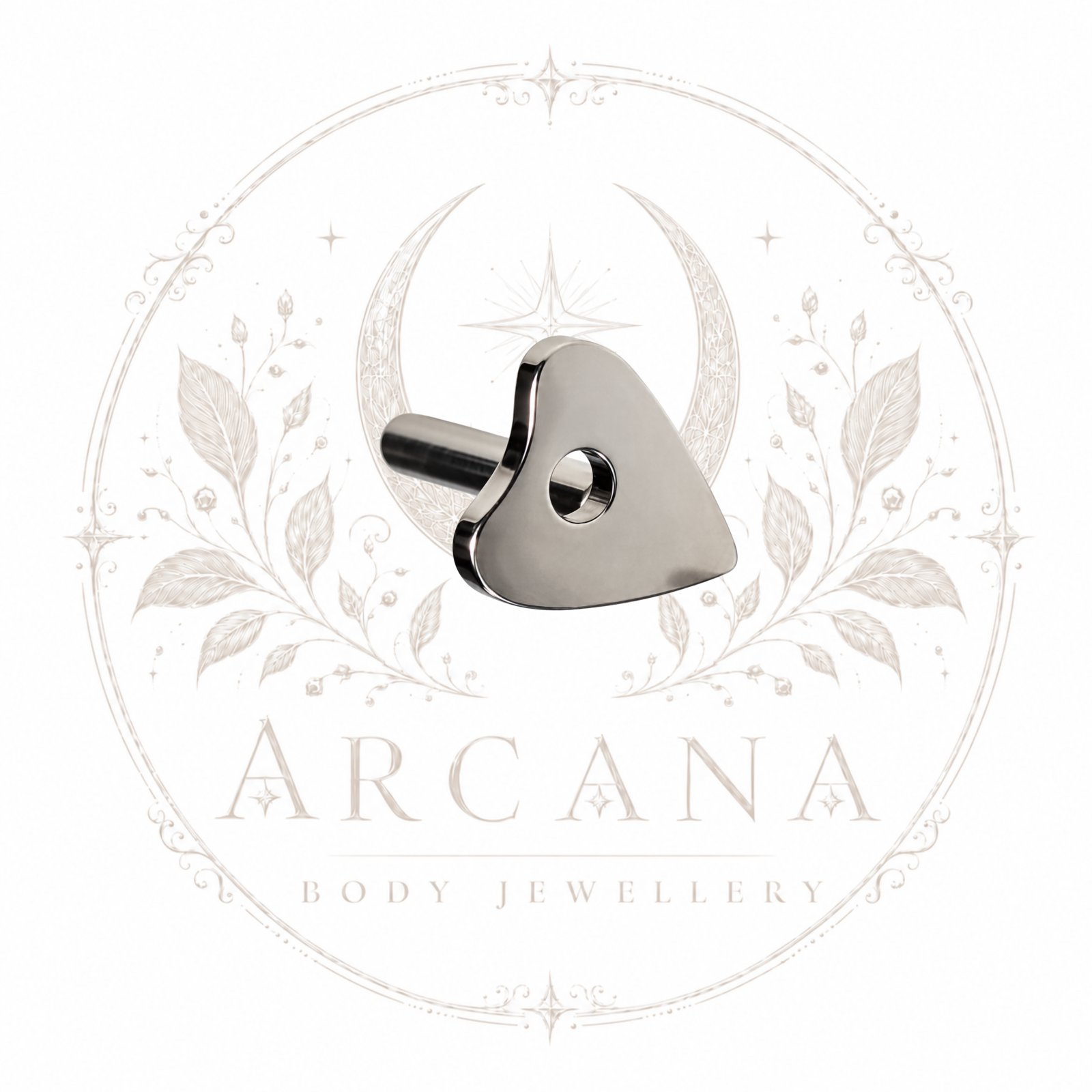
At Arcana, my internally threaded labret post with a 3mm base is made from ASTM F136 implant-grade titanium, as stated on its listing. My internally threaded barbell is also listed in ASTM F136 implant-grade titanium. To browse implant-grade titanium options, start with the Arcana Essentials range.
A higher price alone doesn't prove quality.
How to Clean Titanium Body Jewellery
Home cleaning keeps a piece looking good, but it doesn't sterilise jewellery, and it isn't a substitute for professional advice on a healing piercing.
For a removed titanium piece: use warm water and a small amount of mild, fragrance-free liquid soap. Work away buildup with a soft brush, rinse thoroughly, and dry with a clean, lint-free cloth.
An ultrasonic cleaner can help with suitable plain titanium pieces, using a compatible water-based solution. Never put alcohol or other flammable liquids in an ultrasonic cleaner. Plain 70% isopropyl alcohol wipes can be used on removed, uncoated titanium where the manufacturer permits it.
Sorting real material grades from marketing labels takes a little effort, but your skin will thank you for it. Arcana Body Jewellery exists to make that easier, with ASTM F136 implant-grade titanium pieces, original dark and celestial designs, and sizing that actually goes the distance. Browse the Arcana Essentials range, and if your size isn't listed, Summon Your Style, whatever the size.
Frequently Asked Questions
Is ASTM F136 titanium nickel-free?
ASTM F136 implant-grade titanium has no intentionally added nickel, which is why it is often chosen by people with nickel sensitivity. That is not the same as a guarantee. If you react easily, ask for the exact grade on every part that touches the piercing, including the decorative top, and have the fit checked by a professional piercer before you wear it.
Is "hypoallergenic" enough to tell whether jewellery suits sensitive skin?
No. "Hypoallergenic" is a marketing word, not a material specification, and it does not tell you what metal you are actually buying. A named grade such as ASTM F136 titanium is far more useful because it describes the material itself. Look for the grade on the listing for the post and the top, not just a badge on the product photo.
How should I clean body jewellery intended for a healed piercing?
Remove the piece, then clean it with warm water and a small amount of mild, fragrance-free liquid soap. Work away any buildup with a soft brush, rinse thoroughly and dry with a clean, lint-free cloth. Plain 70% isopropyl alcohol wipes can be used on removed, uncoated titanium where the manufacturer permits it. Home cleaning does not sterilise jewellery, and anything for a fresh or healing piercing should follow your professional piercer's advice.
